
Effort Cycle
Quickly cycle Claude Code reasoning effort levels using Alt+E with a compact colored footer meter.
effort-cycle
Per-agent effort levels for Claude Code: step them from the keyboard, see them at a glance.
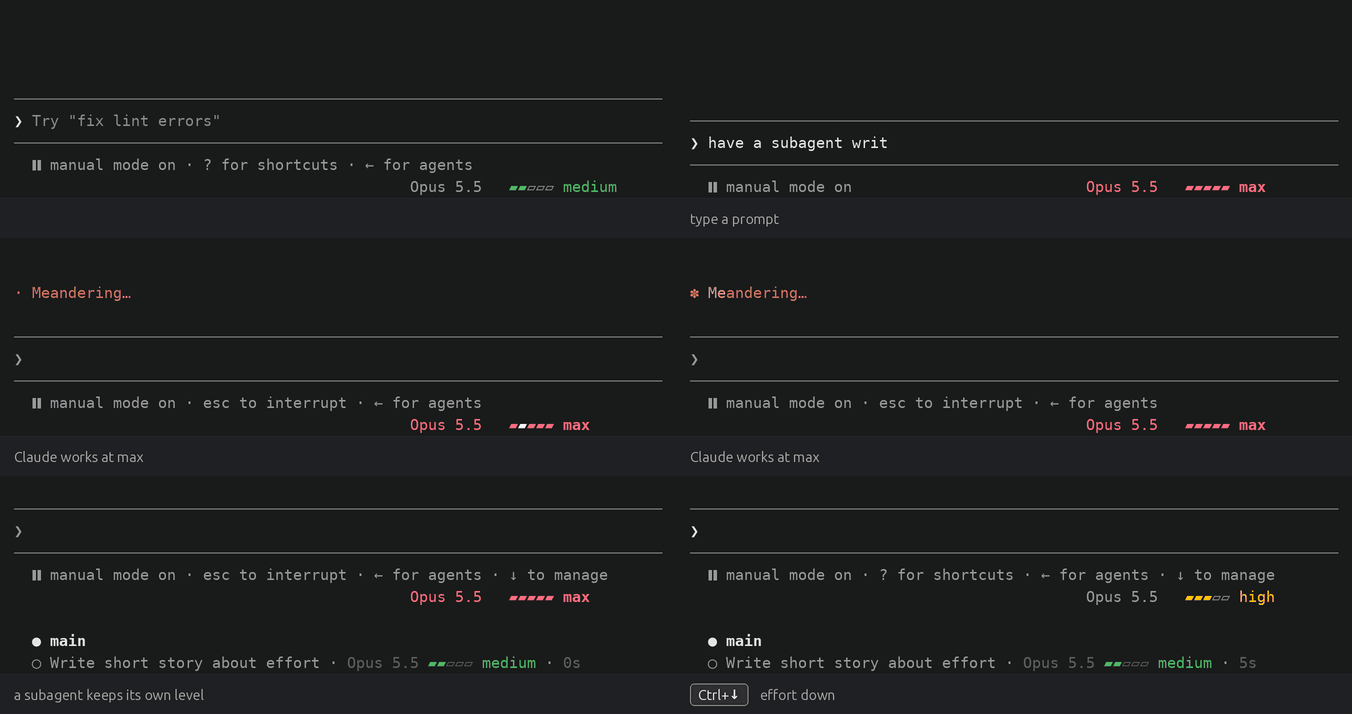
- Ctrl+↑ and Ctrl+↓ step the level: low, medium, high, xhigh, max.
- Per agent. The keys change the agent in view. Every other agent keeps its level.
- A meter in the footer, colored cool to hot:
Opus 5.5 ▰▰▰▱▱ high. - Clickable ‹ › appear around the meter when you point at it.
- The tasks list shows each subagent's model and level in its row.
/configtoggles choose which levels the keys step through.
Install
/plugin marketplace add Anerco/plugins
/plugin install effort-cycle@anerco
There is nothing to bind: the keys work right away. The tasks list's rows need
python3 on your PATH (on macOS, from xcode-select --install or Homebrew).
macOS: Ctrl+↑ and Ctrl+↓ are Mission Control's shortcuts by default. Use
Option+↑ and Option+↓ instead, with your terminal set to send Option as Meta
(Terminal.app: Use Option as Meta key; iTerm2: Left Option key set to
Esc+; Ghostty: macos-option-as-alt = true).
Updates: in /plugin, choose Marketplaces → anerco → Enable auto-update.
Or run claude plugin update effort-cycle@anerco and restart Claude Code.
Built and tested against Claude Code 2.1.291. effort-cycle is a mod (a plugin of function hooks), an early-access API that changes between releases.
Usage
| Control | What it does |
|---|---|
| Ctrl+↑ | One level up for the agent in view, stopping at max |
| Ctrl+↓ | One level down, stopping at low |
| ‹ and › in the footer | Point at the footer's label, then click ‹ to step down or › to step up |
/effort, Alt+P | Claude Code's own controls still work, and take over from the plugin's pick |
The agent in view is the main thread, or the subagent whose transcript you opened from the tasks list. A pick lasts for the session. The footer shows the agent's model and level, led by its type in a subagent's transcript:
Opus 5.5   ▰▰▰▱▱ high                 main thread
Opus 5.5 ‹ ▰▰▰▱▱ high   ›             pointer on the label
Explore · Opus 5.5   ▰▰▱▱▱ medium     a subagent's transcript
The colors follow your theme, from gray at low to red at max. At max the model's name turns red too, and a light sweeps the bar while Claude works. Each Agent call in the transcript gets a line with its agent's level.
Levels in the tasks list
Each subagent's row in the tasks list under the prompt shows its model and level, in the footer's colors:
◯ Fix the parser · Opus 5.5 ▰▰▰▱▱ high · Reading the failing test · 53m 11s · ↓ 499.8k tokens
◯ Find the config · Sonnet 5.5 ▰▰▱▱▱ medium · Searching settings · 2m 4s · ↓ 31.2k tokens
The rows take no clicks; open a subagent's transcript to step it. Claude Code redraws them every five seconds, or in about 0.4 s with Tasks list rows: update at once on (Settings).
Where a level starts
The main thread starts at the level Claude Code gives its model:
CLAUDE_CODE_EFFORT_LEVEL if it is set, else a level your settings save for
the model (as /effort and Alt+P save one), else the model's default: medium
on Opus 5.5 and Sonnet 5.5, xhigh on Opus 4.7, high on the rest.
A subagent starts at its definition's effort, else the main thread's level.
Its meter is empty (—) until its first model request says which, a moment
after it starts; a press before then shows wait.
Settings
The plugin adds these toggles to /config:
| Toggle | Default | What it does |
|---|---|---|
| Effort keys: include low | on | The keys and ‹ › step through low |
| Effort keys: include medium | on | … through medium |
| Effort keys: include high | on | … through high |
| Effort keys: include xhigh | on | … through xhigh |
| Effort keys: include max | on | … through max |
| Tasks list rows: update at once | off | Rows follow a change in about 0.4 s, not up to 5 s |
A level that is off is skipped for every model. Update at once narrows the
terminal by one column and back on each change, so the right edge flickers
briefly; it needs python3 (details).
The values are saved in ~/.claude/settings.json under pluginConfigs.
Known issues
- The spinner can show a different level from the footer (#1). The footer shows the level requests go out with.
- A pick is lost on restart. A plugin cannot write settings, so it cannot
save the level the way
/effortand Alt+P do. - Before the first request, the footer works the level out. An organization's default, or one set on Anthropic's side, can differ. From the first request the footer follows Claude Code; a pick made before it stands.
- A subagent shows
—until its first model request. One started before the plugin loaded shows no model either, until its next request. - ‹ › need mouse events, as in Claude Code's fullscreen view. In tmux, add
set -g mouse on. Without them, use the keys. - Ctrl+↑ and Ctrl+↓ are borrowed from the diff panel. While
/difflists more than eight files they scroll it instead; close it to step again. Rebindingapp:diffFileListUpandapp:diffFileListDownmoves them too. - On macOS, Ctrl+↑ and Ctrl+↓ belong to Mission Control unless you turn them off in System Settings → Keyboard → Keyboard Shortcuts → Mission Control. Option+↑ and Option+↓ work too (Install).
- The tasks list's levels need
python3. AsubagentStatusLinein your own settings replaces the plugin's. On Windows they show only where Claude Code runs commands through Git Bash. - Ultracode is not a step. It is a separate switch the plugin API cannot reach.
How it works
See docs/how-it-works.md for what the plugin hooks, the tasks list's row files, Remote Control and development.
Privacy
No telemetry, no network requests. effort-cycle reads your settings,
CLAUDE_CODE_EFFORT_LEVEL and the session's model and agents, and keeps levels
in the session. For the tasks list it writes subagent levels under
~/.claude/subagent-rows/sessions/ (deleted after a week) and sets one variable,
EFFORT_CYCLE_ROWS.
License
More Mods
Secret Redactor
Automatically redacts API keys, credentials, IP addresses, and emails from terminal outputs and tool arguments before sending to the model.
Claude Flightdeck
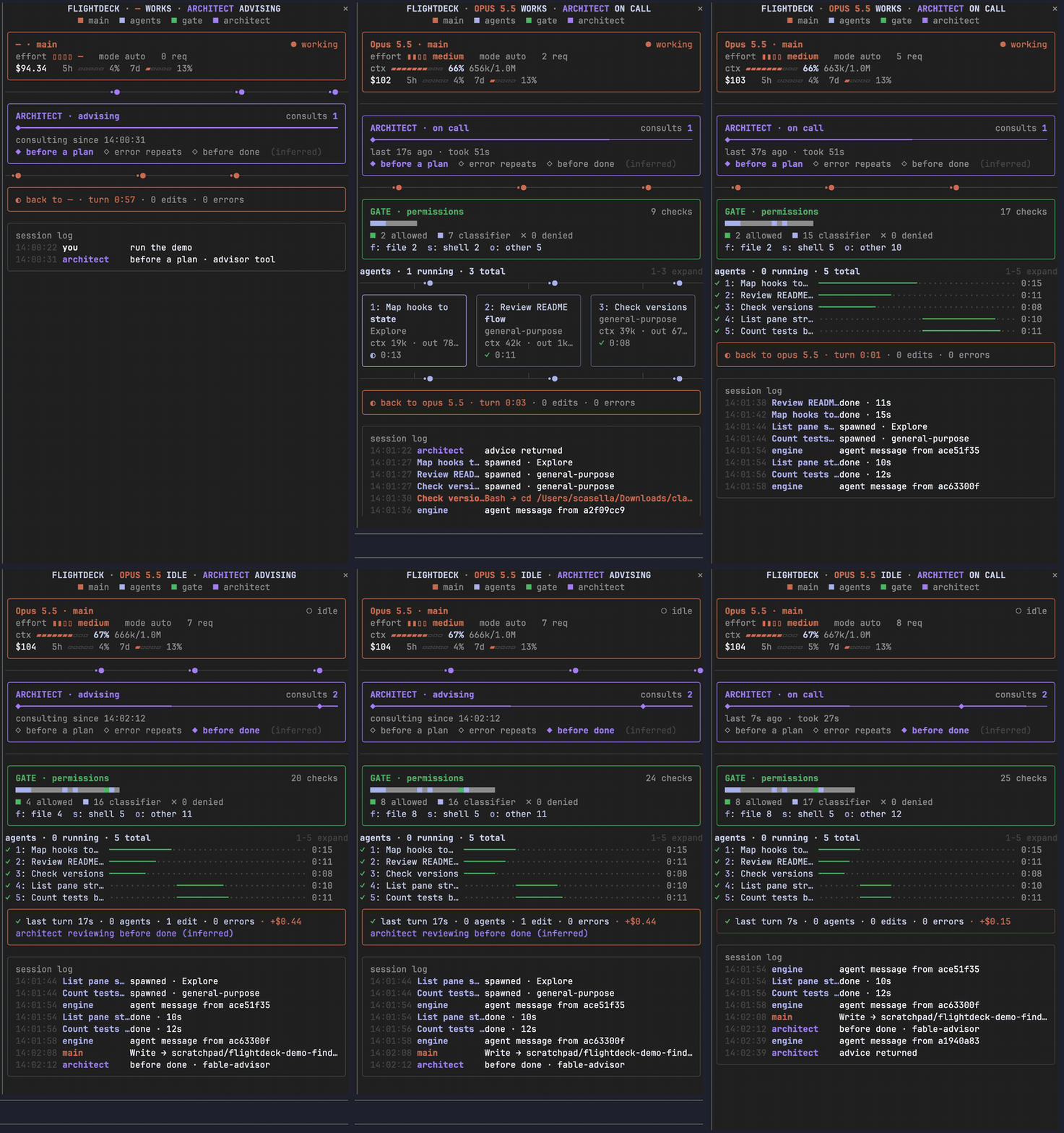
Live agent dashboard pane with context consumption, advisor timeline, permission verdicts, and subagent swimlanes.
Launch Codes
Interactive confirmation and one-time authorization codes for destructive or high-risk terminal commands.