Search for a command to run...
8 listings
A concise weekly digest of newly verified Claude Code mods, copy-paste install commands, and static permission summaries. Unsubscribe anytime.
Business operating system for Claude Code — 57 skills, 21 agents, smart daemon. Unified inbox (WhatsApp/Email/Slack/Telegram), autonomous PR merge, full-AWS monitoring, revenue (Stripe+RevenueCat), e-commerce (Shopify), marketing (Klaviyo/Meta/GA4), voice (Bland/ElevenLabs), APM (Datadog/NewRelic/OTEL), YOLO mode.
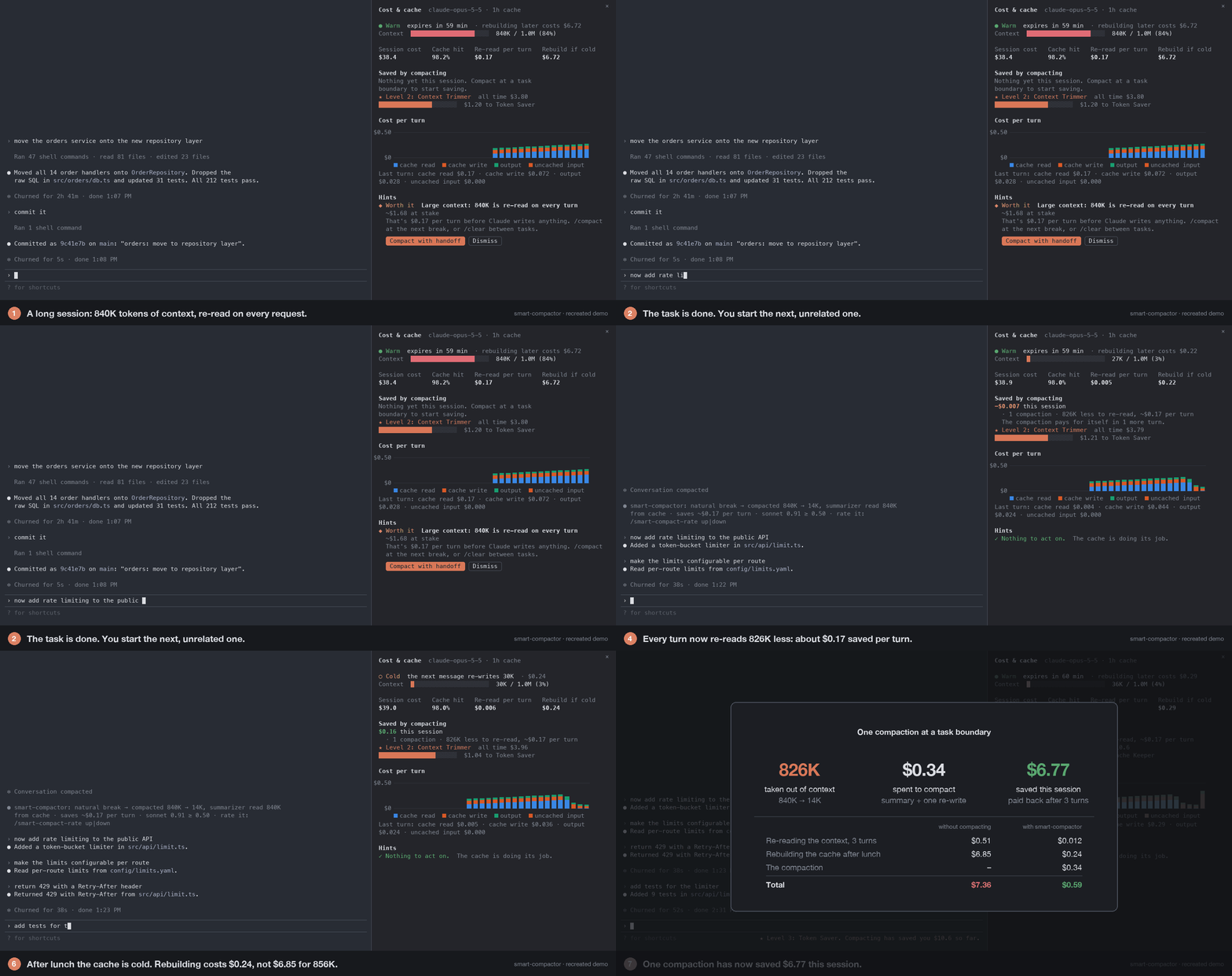
smart-compactor is compacting your session at task boundaries instead of mid-task or when the window is full. A Sonnet judge reads your next prompt, decides whether a new task is starting, and compacts with a handoff summary while the cache is still warm. It learns from your 👍/👎 and adds a live cost & cache panel. In a replay of my own sessions it cut cost by ~33%.
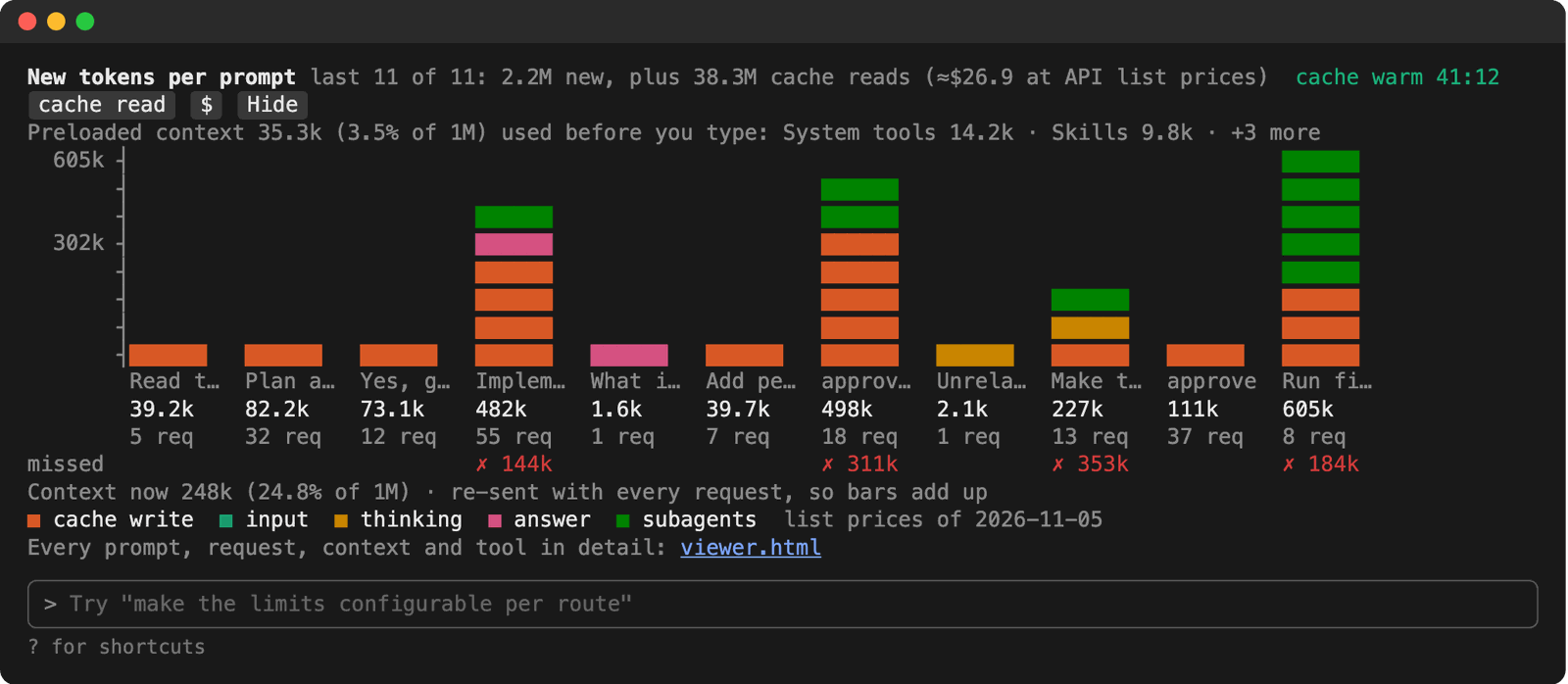
See where your Claude Code tokens go, prompt by prompt. A live chart above the prompt splits each one into new input, cache writes, cache reads, thinking, output and subagents, marks prompt-cache misses, counts down to a cold cache and shows the API list-price cost in dollars. An offline viewer breaks down every session from local JSONL logs. Nothing leaves your machine. Terminal, desktop app and VS Code; macOS, Linux and Windows.
PitStop saves usage in long Claude Code chats. It writes checkpoints, opens a fresh chat instead of re-reading a huge or cold one, flags new-topic work, and escalates big jobs from Sonnet to Opus. Built for desktop-app users who keep hitting their 5-hour limit.
claude-self-lern gives Claude Code a persistent, append-only "lessons learned" file. A small Python script (self-lern) appends entries, searches them, and prints a SessionStart-hook text that injects the latest one-line rules into every new session. Only the Python standard library is needed (Linux/macOS). The file location is configurable via SELF_LERN_DATEI (default ~/.claude/self-lern/LERNEN.md).